
XMM
XLA® Institute Maturity Model
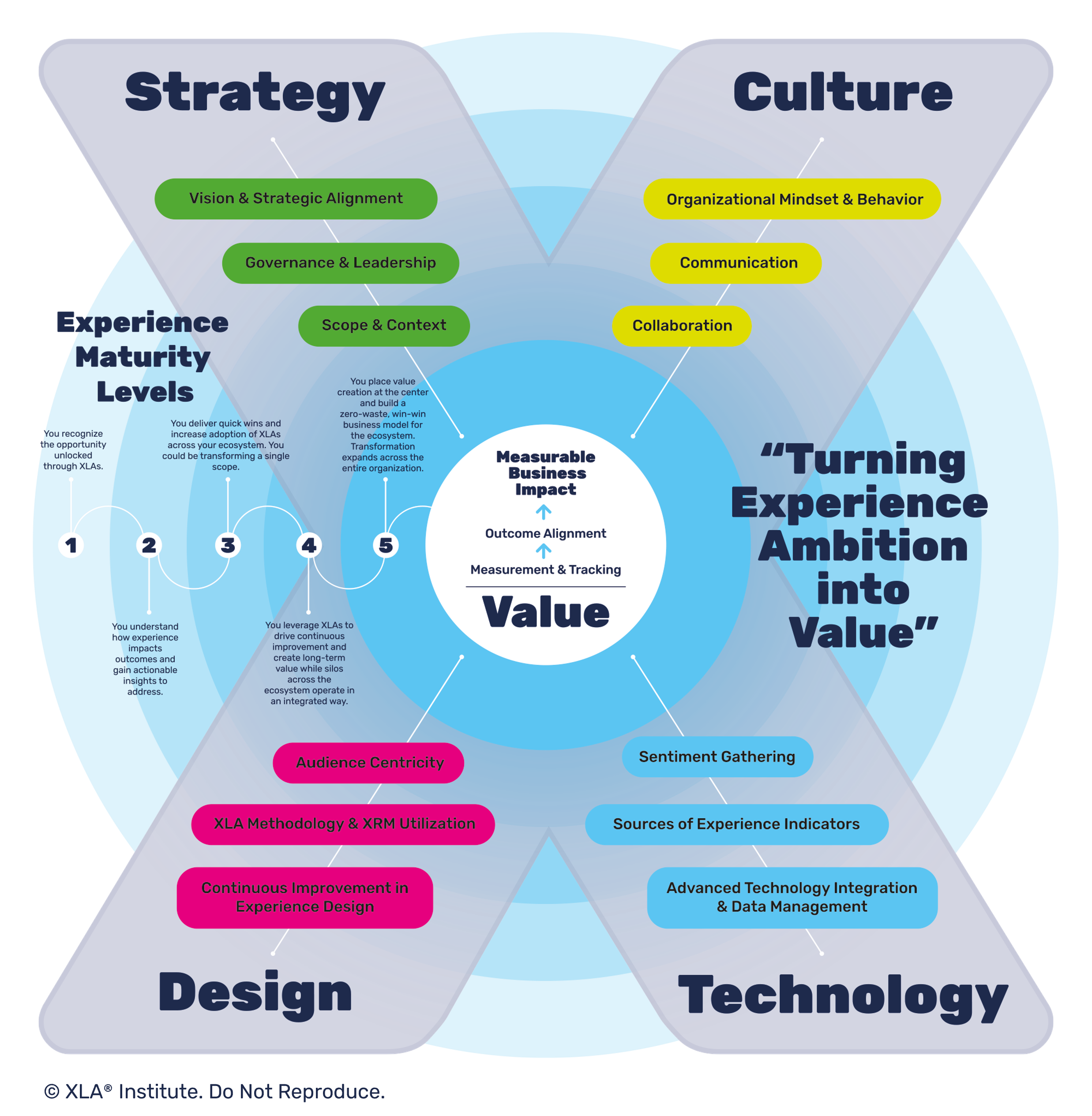
Co-developed between XLA Institute and our Founding and Premium members, the XLA Institute Maturity Model (XMM) enables organizations to assess, manage, track, and roadmap their Experience Management maturity across 15 key aspects and five maturity levels.
At its peak, the model supports the adoption of an XM-centric operating model, where business outcomes are the leading drive for business decisions. The XMM is a robust indicator to your customers that you as a corporate organization are dedicated to providing an experience-centric approach.

XLA® Institute Maturity Model
Co-developed between XLA Institute and our Founding and Premium members, the XLA Institute Maturity Model (XMM) enables organizations to assess, manage, track, and roadmap their Experience Management maturity across 15 key aspects and five maturity levels.
At its peak, the model supports the adoption of an XM-centric operating model, where business outcomes are the leading drive for business decisions. The XMM is a robust indicator to your customers that you as a corporate organization are dedicated to providing an experience-centric approach.
Turn Experience Noise into a Clear Path Forward
When feedback conflicts, issues repeat or improvement activity feels disconnected, it can be difficult to see what is really holding experience back. The XLA® Institute Maturity Model (XMM) helps you move from anecdotal signals to an evidence-based view of capability, and from that view to clear priorities and sustained progress.
Whether you are trying to understand the problem or already working to mature, you can begin from where you are.
Does this Sound Familiar?
Experience problems do not always arrive as a clear diagnosis. They often appear first as recurring noise, disagreement or improvement activity that never quite connects.
The feedback does not seem to add upCustomers, employees, operational data and leaders appear to tell different stories. | The same issues keep returningTeams respond to individual problems; the underlying causes remain difficult to see. | Priorities depend on who is in the roomDifferent functions have different reasons for what matters and what happens next. |
Improvement work is disconnectedInitiatives happen across teams, tools or journeys without a shared view of the wider system. | Progress is hard to demonstrateActivity is visible, but it is difficult to show whether experience capability is actually improving. | The next step is |
The feedback does not seem to add up
Customers, employees, operational data and leaders appear to tell different stories.
The same issues keep returning
Teams respond to individual problems; the underlying causes remain difficult to see.
Priorities depend on who is in the room
Different functions have different reasons for what matters and what happens next.
Improvement work is disconnected
Initiatives happen across teams, tools or journeys without a shared view of the wider system.
Progress is hard to demonstrate
Activity is visible, but it is difficult to show whether experience capability is actually improving.
The next step is unclear
You have already made progress and now need a more structured way to decide where to focus.
Start where you are
You do not need a completed assessment or a mature experience program to benefit from a structured view. Choose the starting point that best reflects what you need now. Hover over the cards below to see where you could start from.
Find the pattern
We know there is experience noise; we do not yet know what is driving it.
Use the XMM to connect signals to a wider view of organizational capability and identify where investigation will be most useful.
Establish a baseline
We need a shared, evidence-based understanding of where we are.
Use the XMM to assess the current state, align leaders and teams around a common language, and make strengths and gaps visible.
Advance our capability
Experience is improving; we want to progress in a more structured way.
Use the XMM to prioritize the gaps that matter, build a practical roadmap, assign ownership and track change through reassessment.
A structured journey from uncertainty to improvement
The XMM helps transform a broad concern about experience into a focused cycle of evidence, assessment, prioritization and action. The following is a possible visitor journey from first signal to repeatable experience improvement:
- Recognize and frame the need - Bring together the signals, recurring issues or improvement ambitions that have prompted action.
- Define the scope - Choose the organization, business unit, service, customer relationship, or capability you want to understand.
- Build the evidence base - Gather observable practices, artifacts, decisions and measures that show how experience capability operates today.
- Assess the current state -Use the model's 15 aspects and five dimensions to create a shared view of current capability across the scope you choose to assess.
- Prioritize and roadmap - Identify the gaps that matter most, agree ownership and sequence practical improvements.
- Improve and reassess - Act on the roadmap, track change over time and use relevant benchmarks where approved and available.
See maturity across 15 key aspects and five levels
The XMM describes what experience-management capability looks like as it develops. For each aspect and level, it identifies observable evidence that can support a consistent assessment.
Together, the aspects provide a connected view of how experience is understood, governed, designed, enabled and improved across the chosen scope. Below you'll see the five dimensions: Strategy, Culture, Design, Technology and Value, with their respective three aspects.
Apply and access the XMM in the way that fits your business
Once you know what you need from the XMM, choose how your organization will use it: to strengthen internal capability, support customers through services, or connect technology with the practices needed for sustainable progress.
XMM access is available for qualifying XLA Institute memberships via our Member Portal. The Member Portal is designed to help organizations navigate the model, perform assessments and track progress across the scopes that matter to them.
For You
Move from anecdotal concerns or disconnected initiatives to a shared view of experience-management maturity. Establish a baseline, identify the capabilities holding back progress and create a roadmap that connects improvement activity to the outcomes your organization values.
Our Corporate Membership provides access to the XMM alongside learning resources and premium content that support the development of experience-management capability.
Built with the XLA community
The XMM was co-developed by XLA Institute with Founding and Premium members, combining the Institute’s experience-management expertise with practitioner input from across the market.
Wherever you are starting, make the next step clearer.
Tell us what you are seeing, what you have already tried and what you want to improve. We will help you identify the most relevant XMM pathway.